Sustainable Gardening: Stunning Tools and Best Practices
Sustainable Gardening Tools and Practices
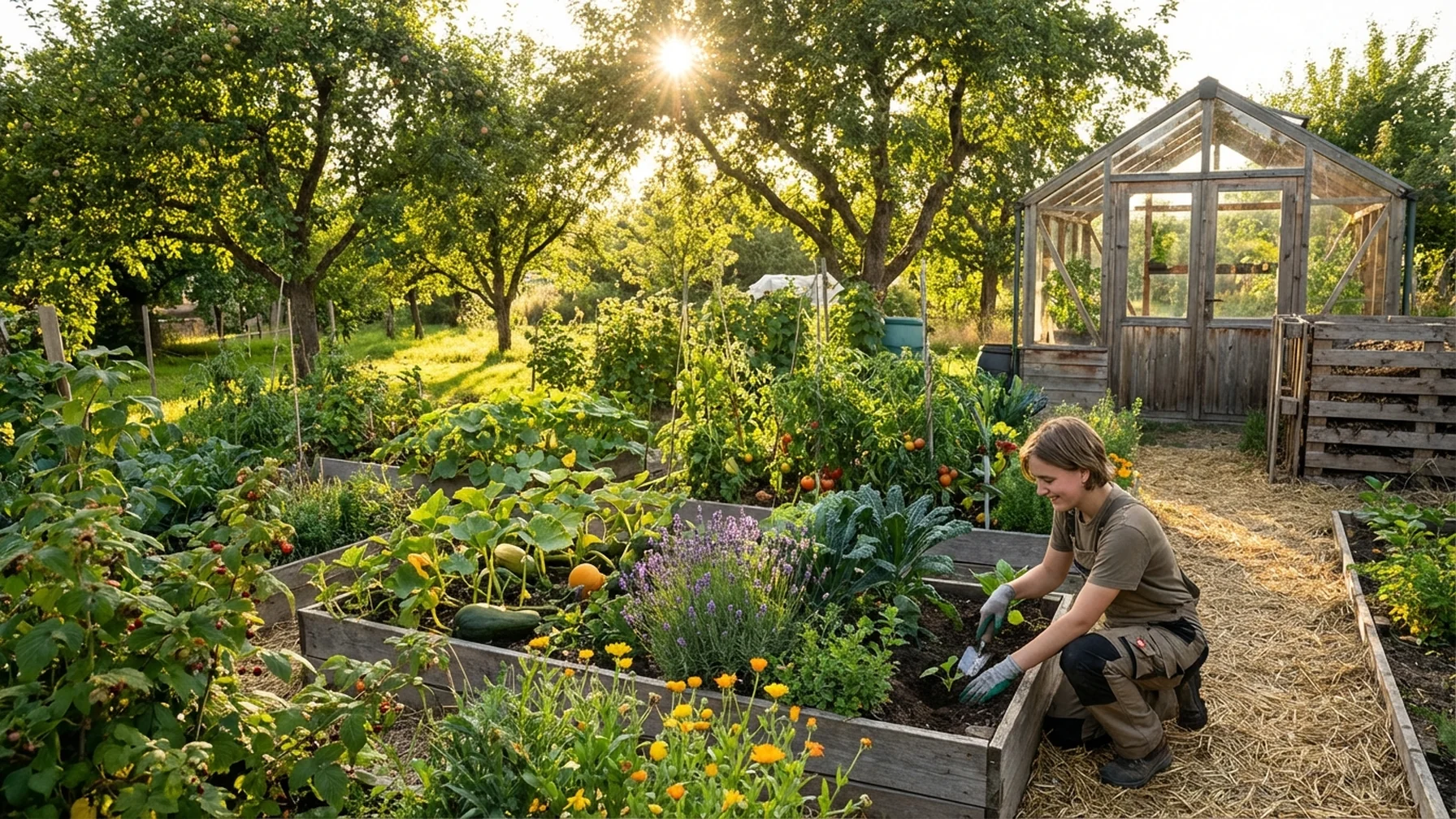
Sustainable gardening tools and practices form the backbone of a garden that feeds people, wildlife, and soil without stripping resources. Think efficient watering, durable hand tools, and techniques that lock carbon into the ground. The aim is simple: grow more with less waste, fewer inputs, and smarter choices.
/
Why sustainability matters in the garden
Gardening decisions ripple outward. Peat extraction destroys habitats; plastic pots break into microplastics; tap-water irrigation raises emissions. With a few switches—renewable materials, closed-loop composting, and careful water use—you shrink your footprint while boosting plant health. Soil becomes your ally, not a consumable.
/
Sustainable gardening tools: what to buy and what to avoid
Start by choosing tools you can maintain and repair. A well-balanced trowel with a forged steel head and ash or FSC-certified wooden handle will outlast bargain-bin versions four times over. The same logic applies to hoes, pruning saws, and forks. Fewer replacements mean less waste and lower lifetime cost.
- Hand tools with replaceable parts: Look for riveted or bolted heads, standard-sized screws, and sharpenable blades.
- Metal watering cans or recycled plastic: They resist UV and can be mended or recycled.
- Manual weeders and hoes: Grub hoes, stirrup hoes, and daisy grubbers reduce herbicide use.
- Bypass pruners over anvil: Cleaner cuts heal faster and lower disease risk.
- Push mowers or battery tools: Cut noise and emissions compared with petrol equipment.
Skip flimsy plastics, single-use ties, and peat-based seed trays. If you must use plastic, choose recycled, UV-stable options and store them out of the sun to prolong life.
/
Table: Tool choices that reduce footprint
| Tool/Item | Conventional Choice | Lower-Impact Option | Why It’s Better |
|---|---|---|---|
| Seed trays | Thin single-use plastic | Soil blocks or durable recycled trays | Cuts plastic waste and root disturbance |
| Pruners | Anvil pruners | Bypass with replaceable blade | Cleaner cuts; repairable |
| Watering | Sprinkler on mains | Drip lines fed by rain barrel | Saves water; targets roots |
| Weeding | Herbicides | Stirrup hoe/manual weeder | No chemical runoff; quick for paths |
| Lawn care | Petrol mower | Reel mower or battery mower | Lower emissions and noise |
A small investment in durable gear makes routine jobs easier and reduces energy use over time. Store tools dry, sharpen seasonally, and oil wooden handles—maintenance is part of sustainability.
/
Soil-first practices that lock in fertility
Healthy soil is the engine of a low-input garden. Feed it, and it feeds you back. A gardener in a small terrace bed can turn autumn leaves into leaf mould and topdress once a year for crumbly, water-holding soil that shrugs off drought.
- Add organic matter: Compost, leaf mould, and well-rotted manure build structure and microbial life.
- Mulch generously: A 5–8 cm layer of wood chips or straw suppresses weeds and slows evaporation.
- Minimise digging: No-dig beds protect fungal networks and reduce weed seed germination.
- Rotate crops: Move families yearly to lower pest pressure and disease buildup.
- Grow cover crops: Clover, phacelia, or rye protect bare soil and fix or scavenge nutrients.
These steps cut fertiliser demand and keep carbon in the ground. In practice, that means fewer inputs carried home and more resilience when weather swings.
/
Water-wise strategies that actually work
Water is often the limit in summer. You can halve consumption with smart scheduling and capture. A gardener who installs two linked barrels off a shed roof can bank hundreds of litres after one storm.
- Harvest rain: Link barrels to downpipes; elevate for gravity-fed drip irrigation.
- Target the root zone: Drip lines, ollas, or soaker hoses beat overhead sprinklers.
- Water early morning: Less evaporation, fewer fungal issues than evening soakings.
- Mulch and shade: Living mulches and temporary shade cloth reduce stress during heatwaves.
- Choose thirsty spots wisely: Keep water-hungry crops in the most fertile, wind-sheltered beds.
Track moisture with your hand, not just a schedule. Push fingers into the soil; if it’s damp at knuckle depth, wait a day. This simple habit prevents overwatering and root rot.
/
Plant choices that lighten the load
Right plant, right place is the quiet secret of sustainable gardening. Mediterranean herbs thrive in poor, dry soil; blueberries demand acidity; pumpkins want rich ground and space. Match plant to microclimate and you need fewer crutches.
Favour perennials—rhubarb, asparagus, artichokes, berry canes—for long-term yields with minimal tilling. Mix in natives to feed local pollinators and beneficial insects. Diversity spreads risk and reduces pest explosions.
/
Composting that actually breaks down
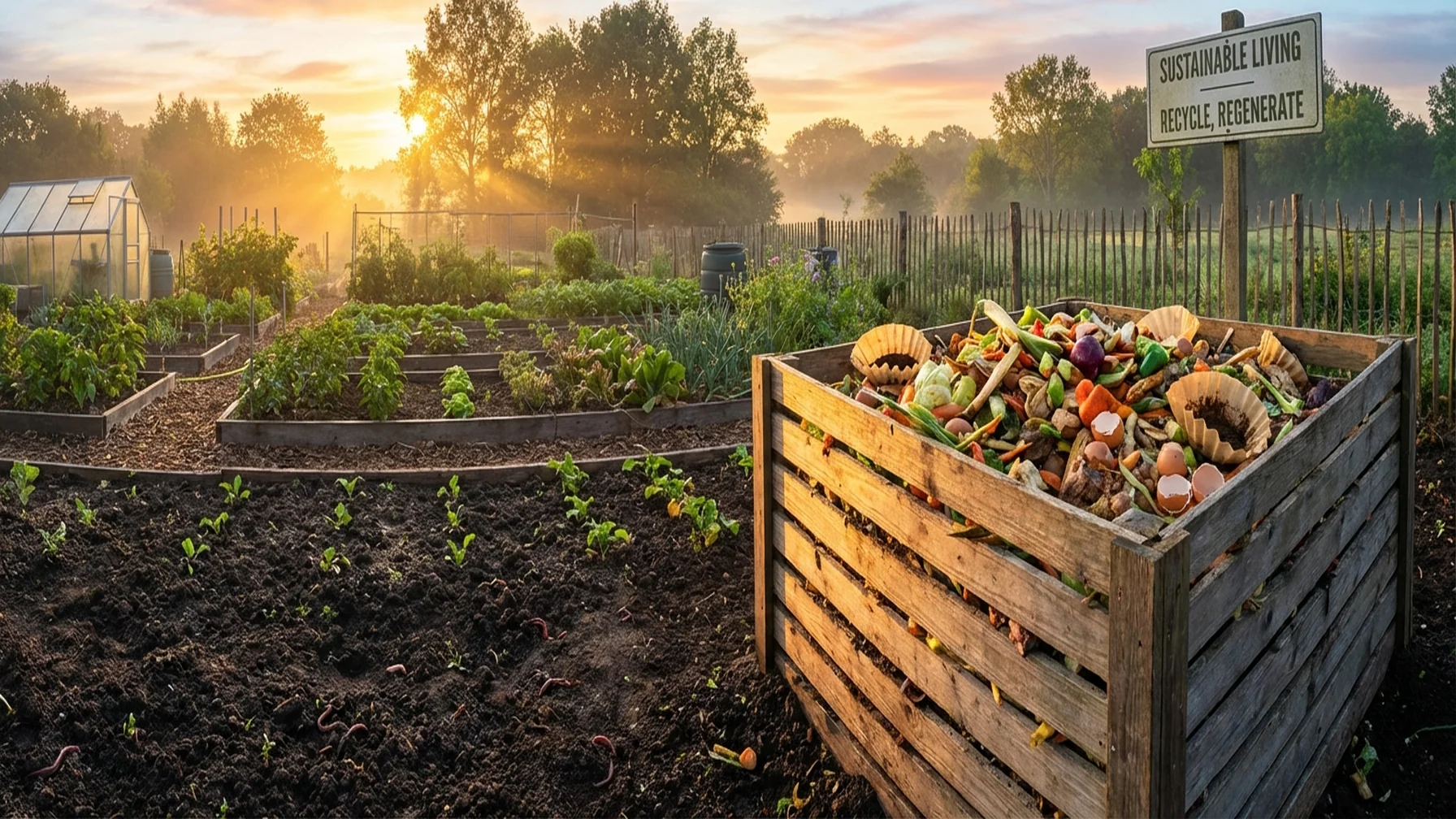
A good compost system turns prunings and kitchen scraps into a nutrient cycle. You only need air, moisture, and a balance of greens and browns. A small urban setup might be two pallets and a lid; a balcony composter can be a worm bin tucked under a bench.
- Alternate layers: Greens (fresh prunings, veg scraps) with browns (shredded cardboard, leaves).
- Keep it damp: Like a wrung-out sponge. Add water if dusty; add browns if slimy.
- Chop materials: Smaller pieces heat faster and finish sooner.
- Turn or aerate: Every few weeks speeds decomposition and curbs odours.
- Use the output: Sieve for seed starting; topdress beds with the coarse fraction.
If space is tight, bokashi pre-fermentation or a wormery handles food waste with minimal smell and yields liquid feed and castings.
/
Pest and disease control without the chemical crutch
Prevention beats cure. Healthy soil and sane spacing go a long way. When problems do appear, switch to tactics that target pests without harming allies.
- Physical barriers: Fine mesh over brassicas blocks cabbage white butterflies and flea beetles.
- Companion planting: Nasturtiums lure aphids; marigolds attract hoverflies; dill supports parasitic wasps.
- Spot pruning: Remove blighted leaves early; clean blades between cuts.
- Habitat for allies: A small log pile and a water dish draw ground beetles, frogs, and birds.
- Soapy water and hand-picking: Quick fixes for aphids, sawfly larvae, and slugs at dawn.
Use sprays as a last resort, and choose narrow-spectrum options like neem or soap. Broad-spectrum pesticides undo years of beneficial insect work.
/
Energy and materials: where to cut emissions
The unseen footprint matters. Transport, fuel, and packaging often outweigh the plants themselves. Borrow infrequently used tools from neighbours, or join a tool library. Choose local compost and mulch to reduce lorry miles. When building beds, untreated hardwood, recycled bricks, or woven willow look good and last.
A tiny scenario: replacing a petrol mower with a reel mower on a small lawn cuts fuel to zero, noise to a whisper, and turns mowing into a ten-minute workout. Grass health improves as clippings mulch the surface.
/
Planning your next season with sustainable gardening tools and practices
Map the garden, note sun, wind, soggy spots, and traffic routes. Plan beds for no-dig, order mulch early, and set a reminder to clean and sharpen tools in winter. If you’re starting from scratch, begin small and build layers each season rather than buying everything at once.
- Audit tools: Repair, sharpen, and replace only with durable, fixable options.
- Set up water capture: Add at least one rain barrel per roof downpipe.
- Build soil: Start a compost system and mulch the beds you’ll use first.
- Pick resilient plants: Mix perennials with proven, locally adapted annuals.
- Create habitat: Add a small pond, log pile, and flowering strip for allies.
With steady tweaks, the garden becomes easier to run, cheaper to maintain, and richer in life. That’s the promise of sustainability: more harvests, fewer inputs, and a landscape that improves with age.